Can Acupuncture Really Help with IVF?
What the Research Says — and What It Means for Your Fertility Journey
If you are in the middle of an IVF journey, you have probably done your research. You are tracking every detail, following every protocol, and doing everything in your power to give yourself the best possible chance. It makes sense that you would wonder: is there anything else I can do?
That is the question that brings many of our patients to Thrive Acupuncture. And the honest answer — one backed by a growing body of scientific research — is yes. Acupuncture is not a magic solution, and it does not replace the work your reproductive endocrinologist is doing. But when added to an IVF cycle, it has been shown to support your body in some meaningful and measurable ways.
Here is what the research actually says, explained in plain language.
First, Let's Look at the Numbers
One of the most comprehensive looks at acupuncture and IVF comes from a 2023 meta-analysis published in Archives of Gynecology and Obstetrics (Zhang et al., 2023). The researchers pooled data from 25 randomized controlled trials involving nearly 5,000 women. The results were notable:
- The clinical pregnancy rate in the acupuncture groups was 43.6%, compared to 33.2% in the control groups.
- The live birth rate was 38% in the acupuncture groups, compared to 28.7% in the control groups.
- These differences were statistically significant, meaning they were unlikely to be due to chance.
Those are not small numbers. A roughly 10-percentage-point difference in live birth rate is clinically meaningful for women who are investing so much — emotionally, physically, and financially — in each cycle.
An earlier large-scale overview published in Frontiers in Public Health (Wang et al., 2021) analyzed data from 312 randomized controlled trials and over 65,000 participants. The review found that acupuncture was superior to sham acupuncture in improving clinical pregnancy rates, and also outperformed no adjunctive treatment for both pregnancy and ongoing pregnancy rates.
"Acupuncture appears to be beneficial to increase the clinical pregnancy rate in women undergoing IVF-ET." — Wang et al., Frontiers in Public Health, 2021
Is the evidence perfect? No — the researchers themselves acknowledge that more high-quality trials are needed, and that results vary depending on study design. But the consistent direction of the evidence is encouraging, and it aligns with what practitioners have observed clinically for decades.
How Does Acupuncture Actually Help? Four Key Mechanisms
Understanding why acupuncture may improve IVF outcomes helps make sense of the research. A foundational 2007 review by Anderson and colleagues identified four distinct pathways. These remain the most widely cited framework in the field — and subsequent research has continued to build on each one.
1. Balancing Your Hormones from the Top Down
IVF success depends on precise hormonal timing and communication between the brain, the pituitary gland, and the ovaries — what scientists call the hypothalamic-pituitary-ovarian (HPO) axis. Think of it as a three-way conversation that has to happen in exactly the right sequence for your follicles to develop well, your egg retrieval to go smoothly, and your cycle to stay on track.
Anderson and colleagues proposed that acupuncture helps regulate this system through the nervous system's own signaling chemicals. When the HPO axis is well-balanced, your body tends to respond more predictably to stimulation medications, your follicles develop more evenly, and your hormone levels stay in the ranges most favorable for a successful retrieval and transfer.
This is one reason we often begin acupuncture before a cycle even starts — not just in the days around retrieval and transfer, but in the weeks leading up to it.
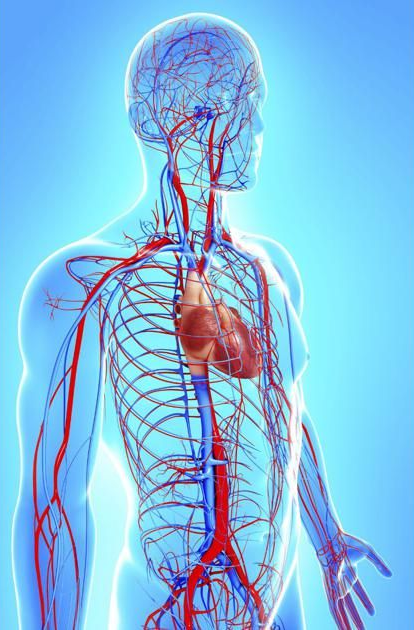
2. Getting More Blood Flow to the Right Places
Here is something that often surprises people: the thickness and quality of your uterine lining is not just about the lining itself — it is about how well it is being nourished. Blood carries the oxygen, nutrients, and hormones that the endometrium needs to become receptive to an embryo. If circulation to the uterus is sluggish, even a healthy embryo can struggle to implant.
Anderson et al. highlighted that both peripheral and cerebral blood flow have been shown to be modulated by acupuncture. In practical terms, this means acupuncture can help direct more circulation to the uterus and ovaries — supporting follicle development during stimulation and creating a warmer, more receptive uterine environment in the lead-up to transfer.
A 2025 literature review in Frontiers in Physiology (reviewing acupuncture and endometrial receptivity) found that acupuncture improved endometrial blood flow state and morphology, contributing to better implantation rates. This is one of the most mechanistically plausible ways acupuncture supports IVF, and it is an area where clinical observation and research findings align well.
3. Taking the Edge Off — Because Stress Really Does Matter
We say this gently but directly: the psychological weight of IVF is real, and it has physiological consequences. Elevated stress hormones — particularly cortisol — can interfere with the hormone balance needed for a successful cycle. Research has consistently shown that stress, anxiety, and depression have a negative correlation with IVF outcomes.
Anderson and colleagues noted that acupuncture has been shown to significantly alleviate depression, anxiety, and stress. This is not just about feeling better (though that matters too). It is about reducing the cortisol-driven disruption that can work against your reproductive hormones behind the scenes.
A 2021 qualitative study published in PMC (Smith et al., 2021), which nested interviews within an RCT of acupuncture during IVF, found that women consistently described acupuncture as providing increased relaxation, reduced psychological stress, and enhanced wellbeing and self-efficacy — regardless of which group they were in. The researchers noted that the psychological benefits alone were significant enough to be clinically relevant for women navigating treatment.
Many of our patients tell us the same thing: their acupuncture appointment becomes the one hour in the week where they actually feel calm. That is not a small thing when you are in the middle of a cycle.
The two-week wait may be one of the most stressful stretches of the entire IVF process. Acupuncture during the luteal phase can help regulate the nervous system and support the immune environment during implantation — when it matters most.
4. Creating the Right Immune Environment for Implantation
This one is perhaps the least discussed — but increasingly, researchers believe it may be one of the most important. Implantation is not just a mechanical process where an embryo attaches to a lining. It is an immunological event. The uterus has to recognize the embryo, tolerate it (even though it carries the father's genetic material), and support its development. This requires a very specific balance of immune signaling molecules called cytokines.
Anderson et al. proposed that acupuncture modulates cytokine activity in ways that support optimal uterine receptivity and implantation. More recent research has begun to clarify the specific immune pathways involved. The 2025 Frontiers in Physiology review found that acupuncture influences the balance of Th1 and Th2 immune cells — Th1 cells are pro-inflammatory and can be detrimental to implantation, while Th2 activity supports the tolerant immune environment an embryo needs to thrive.
This is particularly relevant for patients with recurrent implantation failure, where immune dysregulation is increasingly recognized as a contributing factor.
Timing Matters: When to Start Acupuncture in an IVF Cycle
One of the most common questions we hear is: "When should I start?" The research on this is evolving, but here is what we know.
A 2020 RCT published in PMC (Mog et al.) found that acupuncture performed 25 minutes before embryo transfer significantly improved biochemical, clinical, and ongoing pregnancy rates compared to no acupuncture. This study is frequently cited because it isolated the timing variable and used a randomized, controlled design.
However, a broader body of evidence — and clinical experience — suggests that the women who benefit most from acupuncture during IVF are those who receive it consistently across multiple phases of the cycle, not just on transfer day. A review published by Smith and colleagues (Acupuncture and IVF research: current and future directions) concluded that two to three sessions on or around the day of transfer are insufficient to improve live birth outcomes, but that several acupuncture sessions across a cycle improve endometrial thickness, reduce stress, and improve patient satisfaction.
At Thrive, our approach is to work with you throughout the entire process:
- Before your cycle begins: Building a foundation — regulating your cycle, supporting blood flow, and addressing any underlying patterns
- During stimulation: Supporting follicle development, managing side effects, and keeping your nervous system regulated
- Around egg retrieval: Calming the body and supporting recovery
- Before and after embryo transfer: Optimizing the uterine environment and supporting the implantation window
- During the two-week wait: Reducing anxiety, supporting luteal function, and nurturing the immune environment
- After a positive test: Continued support through early pregnancy, particularly for patients with a history of loss
Who Tends to Benefit Most?
While acupuncture can be a supportive addition for anyone going through IVF, research and clinical experience suggest it may be particularly helpful for:
- Women with elevated stress or anxiety who are struggling with the psychological demands of treatment
- Patients with a history of thin uterine lining or poor endometrial response, where improved blood flow can make a real difference
- Those with recurrent implantation failure, where immune and inflammatory factors may be playing a role
- Women with irregular cycles or hormonal imbalances that complicate the stimulation phase
- Anyone who has had multiple unsuccessful cycles and is looking for additional integrative support
If you are not sure whether acupuncture is right for your specific situation, we would be happy to talk through your history and help you think through how it might fit into your care.
What to Expect at Thrive
Our approach to fertility acupuncture is grounded in both Traditional Chinese Medicine and the current evidence base. At your first visit, we will take a detailed intake — your cycle history, your IVF protocol, any past results, and your overall health picture. From there, we build a treatment plan that is specific to you and timed with your cycle.
We are also happy to communicate directly with your reproductive endocrinologist and coordinate care around your retrieval and transfer schedule. Many of our fertility patients come to us on the recommendation of their RE — and we take that collaborative relationship seriously.
Acupuncture sessions are typically 45 to 60 minutes. Most patients find them deeply relaxing. Side effects are minimal — some mild bruising or temporary soreness at needle sites is the most common experience.
The Bottom Line
No one can promise you that acupuncture will make your IVF cycle successful. Anyone who tells you otherwise is overstating the evidence. What we can say, with growing confidence, is that acupuncture is a safe, well-tolerated, and increasingly research-supported complement to IVF — one that addresses the hormonal, circulatory, psychological, and immunological dimensions of fertility in ways that conventional treatment alone does not.
The research is pointing in a clear direction: women who incorporate acupuncture into their IVF care tend to have better outcomes, feel more supported through the process, and arrive at transfer day with bodies that are as prepared as possible.
That is what we are here to help you do.
References
Anderson BJ, Haimovici F, Ginsburg ES, Schust DJ, Wayne PM. In vitro fertilization and acupuncture: clinical efficacy and mechanistic basis. Alternative Therapies in Health and Medicine. 2007;13(3):38-48.
Zhang C, Huang Y, Shen Z, et al. Effects of acupuncture on pregnancy outcomes in women undergoing in vitro fertilization: an updated systematic review and meta-analysis. Archives of Gynecology and Obstetrics. 2023;309(3):775-788.
Wang X, Wang Y, Wei S, et al. An overview of systematic reviews of acupuncture for infertile women undergoing in vitro fertilization and embryo transfer. Frontiers in Public Health. 2021;9:651811.
Smith CA, Armour M, Ee C, et al. IVF, acupuncture and mental health: a qualitative study of perceptions and experiences of women participating in a randomized controlled trial of acupuncture during IVF treatment. Integrative Medicine Research. 2021;10(1).
Mog SR, Bakhshalizadeh S, et al. The effect of acupuncture on the day of embryo transfer on the in vitro fertilization outcomes: an RCT. Evidence-Based Complementary and Alternative Medicine. PMC7142313. 2020.
Smith CA, Grant S, Lyttleton J, Cochrane S. Acupuncture and in vitro fertilisation research: current and future directions. Acupuncture in Medicine. 2018;36(2):117-122.
Wang X, Wang Y, Shi X, et al. Acupuncture as an adjunct therapy for enhancing endometrial receptivity in female infertility: a literature review. Frontiers in Physiology. 2025.
This blog is for informational and educational purposes only and does not constitute medical advice. Please consult your healthcare provider regarding your individual treatment plan.
Recent Posts